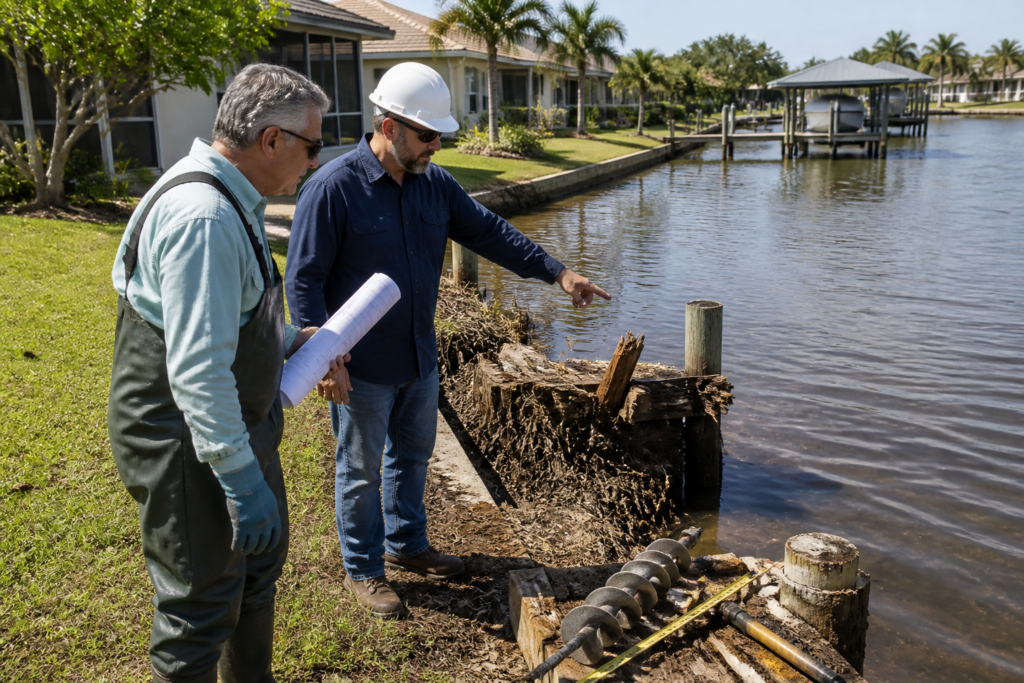
What You’ll Need
Before crews show up with pilings and framing lumber, get these items squared away. Skip this step, and you’ll be the homeowner watching a stalled job site for three weeks.
- Survey and site plan: a recent boundary or bathymetric survey showing water depth and property lines
- Permits: City of Cape Coral dock permit, Lee County approval, and a Florida DEP or Army Corps sign-off if you’re near submerged grass beds
- Tide and depth readings: at least one low-tide measurement at your seawall or bank
- Basic tools: tape measure, stakes and string line, post-hole digger or hand auger, machete or brush cutters for vegetation
- Safety gear: waders or water shoes, gloves, polarized sunglasses for spotting underwater obstructions
- Old structure removal plan: dumpster or hauling arrangement if you’re tearing out a rotted dock or seawall cap
- Marine contractor consultation: a walk-through with a licensed dock builder before you dig, drive, or clear anything
- Time: plan on 1-2 weekends for assessment and clearing, plus 4-8 weeks of permit review before construction starts
- Skills: comfort wading in canal water, basic measuring, and patience for paperwork — the physical prep work itself doesn’t require marine construction experience
Four hundred miles of canals wrap through Cape Coral, and almost none of them start with dirt ready for a dock. That’s the part most homeowners skip right past when they picture boat dock construction — they jump straight to picturing the boat lift and the sundowners, not the muck, the old seawall cracks, or the mangrove root ball sitting exactly where the first piling needs to go.
Here’s what most people miss: the shoreline itself decides whether your project goes smoothly or turns into a six-month permit fight. Bottom soil, water depth, tidal swing, drainage — all of it shapes what kind of dock you can even build, and where. Skip the prep work, and you’re gambling with rework, failed inspections, or a structure that shifts within a year or two.
Get the shoreline right first, and everything after — piling placement, decking, the lift — falls into place a lot faster. That’s what
What You’ll Achieve and What You Need Before You Start
Last spring, a homeowner off Palaco Grande Parkway called us after clearing brush along her seawall — only to find the soil underneath was too soft for pilings. That’s the scenario shoreline prep is meant to prevent. Get it right, and you’ll walk into boat dock construction with a stable base, approved permits, and a clear installation timeline.
Tools, Permits, and Site Information to Gather First
Before crews show up, gather your survey, seawall elevation records, and county permit paperwork. You’ll also want: a tide chart for your canal, soil boring results, and photos of your existing shoreline. If resale is on your mind down the road, it’s worth researching the benefits of floating docks for waterfront resale before locking in a design.
Understanding Cape Coral’s Canal System and Why Shoreline Prep Matters
Cape Coral runs over 400 miles of canals, and each one behaves differently. Brackish water, shifting sediment, and seasonal tide swings mean prep work isn’t optional — it’s what keeps your dock standing after the next storm.
Step 1: Assess Your Shoreline and Water Conditions
Your shoreline will tell you exactly what kind of boat dock construction it can handle — you just have to read it right. Before any crew shows up with pilings or lumber, someone needs to walk the property at both high and low tide and take real notes, not guesses.
Checking Water Depth, Bottom Soil, and Tidal Swing
Cape Coral’s canals aren’t uniform. Some stretches run 4 feet deep at the seawall, others drop to 8 or more within a few yards. Soft muck bottoms need different piling depths than sandy or shell-packed bottoms. And tidal swing matters more than most homeowners think — a dock built without accounting for a foot or two of daily rise and fall ends up either high and dry or half-submerged.
Spotting Erosion, Seawall Damage, or Drainage Issues Before You Build
Cracked caps, leaning panels, undermined soil behind the wall — these are red flags, not cosmetic issues. Building on a compromised seawall is asking for trouble down the road. If you’re searching dock and pier construction near me, ask whoever you hire to also run dock inspection services first. It’s cheap insurance against a costly rebuild.
Step 2: Confirm Permitting and Regulatory Requirements With the City and State
Ever wonder why two neighbors on the same canal get completely different permit timelines? It usually comes down to setbacks, seawall condition, and how clean the application package is when it lands on a reviewer’s desk. Cape Coral requires a city permit for any new dock, and depending on your canal, Lee County and the Florida DEP may need to sign off too. Skip this step, and you risk a stop-work order mid-build.
Working With Lee County and Florida DEP on Setbacks and Environmental Rules
Lee County reviews side and rear setbacks, typically 25% of your waterfront width per side, while DEP checks for seagrass, manatee zones, and water depth. Bring survey data early; it saves weeks.
Common Permit Delays and How to Avoid Them
Most delays trace back to incomplete drawings or missing elevation certificates. Working with established floating dock builders near me who already know Cape Coral’s review process helps you avoid resubmission cycles that can add a month or more.
Step 3: Clear and Grade the Shoreline Access Area
Roughly 70% of Cape Coral dock delays trace back to one thing: uncleared shoreline that wasn’t graded before the crew showed up. That’s not a guess — it’s what shows up on job after job along the canal system here.
Removing Vegetation, Debris, and Old Structures the Right Way
Old pilings, rotted decking, storm debris — none of it belongs where new footers need to go. Pull it out, haul it off, and grade the bank to a stable slope before any construction starts. Skip this step, and you’ll pay for it later when pilings shift in soft, uneven soil. Most reputable boat dock contractors will walk the site with you first and flag exactly what needs to go.
Protecting Mangroves and Seagrass During Cleanup
Here’s the thing — you can’t just bulldoze your way to a clean shoreline in Cape Coral. Mangroves and seagrass beds are protected, and disturbing them without a permit can stall your whole project. Hand-clear around root systems, mark protected zones with flagging, and keep heavy equipment well back from the water’s edge until grading is done right.
Step 4: Mark Piling Locations and Plan Your Dock Layout
Here’s a myth worth killing: more pilings don’t mean a stronger dock. Overcrowding pilings just adds cost and gives storm surge more to push against. Most experienced dock contractors will tell you spacing and placement matter far more than raw quantity. Once your survey and permits are squared away, grab some marker stakes or floats and lay out your actual footprint before anyone drives a single post.
Stationary Dock vs Floating Dock Layout Considerations
Stationary docks need pilings driven to load-bearing depth, so layout accounts for tide swing — fixed height above water. Floating docks shift with water level, so layout centers on flotation placement and guide piling spacing instead.
Spacing Pilings for Small Pond Docks vs Canal-Front Docks
Small pond docks can often work with 8-foot piling spacing since wave action is minimal. Cape Coral canal-front docks facing boat wakes and tidal flow typically need tighter spacing, often 6 to 8 feet, plus deeper embedment for stability.
Common Mistakes to Avoid When Prepping a Cape Coral Shoreline
Picture a homeowner off Beach Parkway who cleared brush, poured a slab, and ordered pilings — only to find out a week later that the survey didn’t account for a submerged limestone shelf. The crew had to stop, re-drill, and push the timeline back three weeks. That’s the kind of setback that shows up when prep gets rushed.
Here are the mistakes contractors see most often on Cape Coral canal lots:
- Skipping soil testing before piling installation, which leads to sinking or shifting posts within a year or two.
- Ignoring tidal swing when setting dock height, leaving a structure that floods every king tide.
- Cutting mangroves without a permit — a violation that can halt the entire project.
- Guessing at setbacks instead of confirming canal-front property lines.
Realistically, most of these errors come down to skipping a proper site assessment. Builders who specialize in Cape Coral docks catch these issues before the first post goes in the ground — saving homeowners both time and headaches down the line.
Verify Your Site Is Ready and Plan Your Next Steps With a Dock Builder
Your shoreline prep isn’t finished until someone with a trained eye confirms it. That’s blunt, but it’s true — a lot of Cape Coral homeowners clear brush, check depth, and think they’re set, only to find a soil issue a permit reviewer catches later.
Before pouring a dime into materials or scheduling a crew, walk the site with a builder and run through the basics: bank slope, water depth at low tide, canal setbacks, and access for equipment that’ll drive pilings or set floats. Bring photos and any survey documents you’ve got.
Realistically, most homeowners searching for boat dock construction near me are just trying to find someone who’ll tell them straight whether their lot works for a stationary dock, a floating design, or something mixed. That’s the conversation to have first.
Once the site’s confirmed, the builder maps out pilings, footers, and framing timelines so there are no surprises once construction starts.
How-To FAQ
How much would it cost to build a boat dock in Cape Coral?
Costs swing a lot based on length, material, and whether you’re building stationary or floating. A 30-foot dock on a canal lot runs differently than a small pond dock inland, and permitting fees, piling counts, and decking choice all move the number. Get a site walk from a local builder before you budget off a generic online calculator — canal depth and seawall condition change things fast.
How many pilings does a typical Cape Coral dock need?
Most residential docks need one piling roughly every 8 to 10 feet along the frame, plus corner posts and extra support near a boat lift. Canal-front lots with harder sand bottoms sometimes need fewer, while soft-bottom areas near mangrove fringes need more to keep things stable. A marine contractor will confirm exact spacing once they’ve checked your bottom soil.
Can I build my own dock in Cape Coral, or do I need a licensed contractor?
You can technically build your own dock, but Cape Coral’s permitting process (city plus Lee County plus Florida DEP review) trips up most first-timers. Realistically, working with a marine contractor who already knows the local approval steps saves months. Driving pilings by hand in canal mud without the right gear also isn’t something most homeowners want to tackle solo.
How long does shoreline prep and dock construction actually take?
Site prep — clearing, grading, marking pilings — usually takes a few days once permits are in hand. The permit wait is the real timeline driver; that can take anywhere from a few weeks to a couple months depending on how clean your application is. Build time for the dock itself is often faster than the paperwork.
Is it safe to clear vegetation near mangroves myself before construction?
No, not without checking first. Mangroves and seagrass beds are protected under Florida environmental rules, and clearing them without proper review can trigger fines and stall your permit entirely. Have your contractor or a DEP-familiar surveyor mark protected zones before anyone touches a machete or mower near the water.
What’s the difference between prepping for a stationary dock versus a floating dock?
Stationary docks need pilings driven to a stable depth, so soil testing and water depth checks matter most. Floating docks rely on floats or barrels and anchoring points instead, so shoreline prep focuses more on grading access and checking for tidal swing. Canal lots in Cape Coral usually lean stationary; smaller ponds or lakes often go floating.
A shoreline that’s been graded, checked for depth, and cleared of old debris tells the crew exactly where to drive pilings and how to plan the layout. That prep work is what separates a smooth build from a stalled one. Get the water depth and bottom soil right, and boat dock construction moves forward without surprise change orders halfway through. Sort out the Lee County and DEP paperwork early, and you won’t be staring at a stalled job site while your neighbor’s dock goes up first. Cape Coral’s canal system rewards homeowners who plan ahead — the ones who skip these steps usually end up paying for it later, one way or another.
Here’s the honest truth: most shoreline prep mistakes are avoidable with a walk-through from someone who’s done this hundreds of times. Coastal Marine Group has spent decades reading Cape Coral shorelines, handling the permit back-and-forth, and building docks that hold up through storm season after storm season. Call (239) 372-4586 or stop by the Southeast 47th Terrace showroom, and get your site evaluated before you break ground.