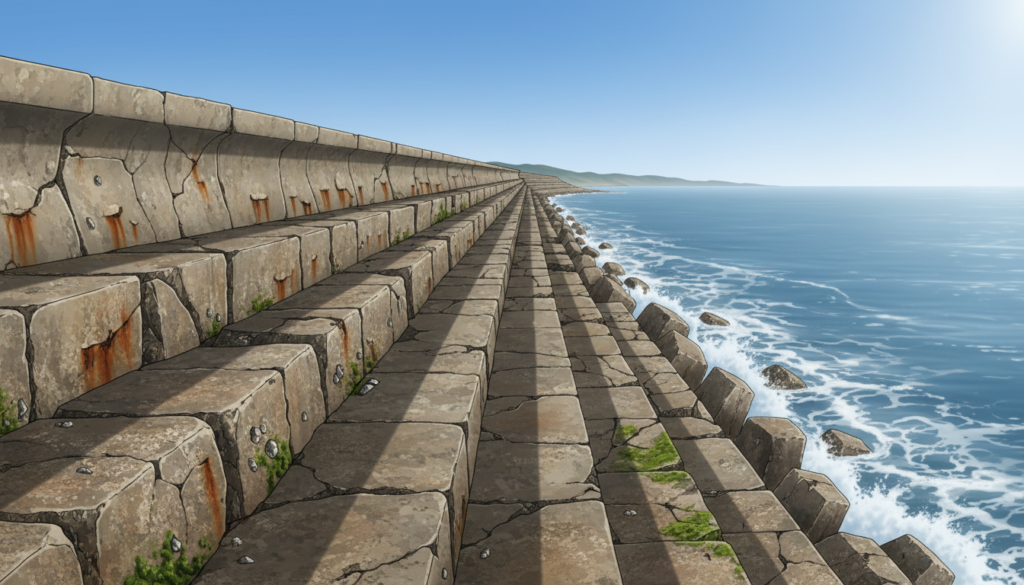
Surprising fact: over 60% of failures begin behind the wall, not on the visible face.
In Florida, many shore barriers hold for about 25 to 50 years, but that range shifts with your maintenance and local exposure. Small cracks, poor drainage, or unstable soil often start hidden damage that accelerates wear.
Material choice, concrete quality, anchors, and protective coatings all influence the structure’s life. Wave energy and corrosion target foundations first, so timely repairs and proper systems matter more than you might think.
If you want an expert evaluation, Orange Beach Pile Protection offers site assessments and can be reached at 850-532-5755. Early signs of erosion or cap failure are your best cues to act and avoid costly replacement.
Key Takeaways
- Most Florida installations last 25–50 years with regular maintenance.
- Hidden failures behind the wall cause over half of problems.
- Good drainage, quality materials, and prompt repairs extend lifespan.
- Watch for cracks, erosion, and anchor issues as early warning signs.
- Professional evaluation can prevent full replacement and save years.
Understanding How Long Does a Seawall Last in Saltwater Conditions
You can expect most Florida seawall installations to perform for about 25–50 years when design and upkeep are sound.
Routine inspections and timely maintenance make the biggest difference in overall lifespan. Small issues like poor drainage or shifting soil often start hidden and then force costly repairs.
- Construction quality and material choice set the baseline for performance.
- Water movement, tides, and boat wake accelerate wear on the face and foundation.
- Regular checks spot erosion, anchor problems, and early cracking before they worsen.
| Factor | Typical Impact | What You Should Watch |
|---|---|---|
| Material | High — dictates corrosion and wear | Concrete mix, coatings, steel grade |
| Soil & Drainage | Medium — affects support and settlement | Soft fill, erosion, clogged drains |
| Maintenance | High — extends service life | Inspections, minor repairs, cleaning |
Environmental Factors That Impact Your Shoreline
Sun, salt, and shifting soils each play a role in weakening structural defenses along the water.
Saltwater exposure and UV accelerate wear on caps and coatings. That wear opens the surface to faster corrosion and visible damage. Regular checks help you spot worn seals and faded coatings before problems spread.
Saltwater Exposure and UV Damage
Marine spray and sunlight combo strip protective layers. Over time, the top of the wall loses strength and needs refinishing or replacement.
Soil Composition and Erosion
Fine sands and organic pockets, like those found near Bayou Texar, shift and create voids behind wall sections. That trapped water increases hydrostatic pressure and invites settling or sinkholes.
- Install proper drainage and weep holes to relieve hydrostatic pressure behind seawall panels.
- Watch for leaning or gaps—these are clear signs the soil behind seawall systems is eroding.
- Reinforcement at the toe and smart construction details protect your property from wave and wake scour.
| Factor | Impact | Action |
|---|---|---|
| Saltwater & UV | Coating loss, surface corrosion | Refinish caps; use UV-resistant coatings |
| Soil Type | Settlement, voids behind wall | Embed toe; stabilize with compaction or stone |
| Hydrostatic Pressure | Panel bulging, failure | Install weep holes and drainage systems |
Comparing Lifespan Expectations by Material
Different materials set very different expectations for service life along your shoreline. Below is a quick guide to help you match material choice with expected performance and upkeep needs.
Concrete and Steel Performance
Concrete offers strong protection and typically serves for 30–60 years. Watch for cracks that let water reach internal reinforcement.
Steel delivers high strength but needs protective coatings. Expect 25–40 years before corrosion and repairs become frequent.
Vinyl and Composite Longevity
Vinyl materials resist corrosion and often last 50–80 years. They need less heavy repair and handle marine exposure well.
Timber Bulkhead Considerations
Timber is lower cost but can run 10–40 years. It is vulnerable to marine borers and wave damage and may require earlier replacement.
- Proper construction and quality anchors reduce premature failure.
- Routine maintenance and timely repair of joints can add decades to life.
- Choose materials with an eye on local erosion, soil type, and wave energy.
| Material | Typical Lifespan (years) | Key Pros | Key Cons |
|---|---|---|---|
| Vinyl / Composite | 50–80 | Corrosion-resistant, low maintenance | Higher upfront cost, limited heavy-load capacity |
| Concrete | 30–60 | Robust, strong against impact | Needs crack monitoring; reinforcement corrosion risk |
| Steel | 25–40 | High strength, thinner profile | Requires coatings; prone to rust if damaged |
| Timber | 10–40 | Lower initial cost, easier to replace | Vulnerable to borers and wave wear |
“Pick materials that suit your site, and plan for regular upkeep—this saves money over decades.”
The Role of Drainage and Hydrostatic Pressure
Water trapped behind panels creates steady outward force that your structure must resist.
Hydrostatic pressure is the push from saturated soil and pooled water. If that pressure builds, you can see bowing, cracking, or sudden failure in the wall.
Well-designed drainage systems make a measurable difference over time. Filter fabric, weep holes, and gravity drains let water escape without washing soil away.
Modern construction often adds reinforcement and anchors to counteract saturated fill. Proper anchor placement keeps panels upright during storms and seasonal soak events.
- Weep holes reduce the water that creates outward pressure.
- Filter fabric prevents fine soil from migrating through drains.
- Regular checks stop minor flow issues from becoming major erosion problems.
| Drain Component | Purpose | When to Inspect | Typical Fix |
|---|---|---|---|
| Weep holes | Relieve trapped water | After heavy rain or seasonally | Clear blockages; add new outlets |
| Filter fabric | Keep soil stable | During repairs or every few years | Replace torn fabric; recompact soil |
| Anchor & tiebacks | Resist outward loads | When leaning or movement appears | Tighten, add reinforcement, or replace |
“Manage the water behind your panels and you protect both soil and structure.”
Signs Your Structure Needs Professional Attention
Visible shifts or new gaps along the shoreline are your first cue that the seawall may be failing. Look for hairline cracks in the cap, widening joints, and spalling concrete. These are early signs that the underlying structure is under stress.
Identifying Structural Leaning and Sinkholes
Soft spots or sinkholes forming behind wall sections after heavy rain mean soil loss. That loss often stems from failed drainage or rising hydrostatic pressure that pushes water through weak zones.
Rust staining near tie-rods points to internal steel corrosion. Leaning panels or tilted fences are clear warnings that the wall no longer holds back earth. These conditions can cause rapid damage to your property if ignored.
- If you notice cap cracks or spalling concrete, schedule a professional inspection before issues grow.
- Routine maintenance and timely repairs stop small faults from becoming full replacements.
- Address erosion and drainage now to reduce future costs and extend the life of nearby seawalls.
Deciding Between Targeted Repairs and Full Replacement
A careful inspection of your foundation and anchors guides the right choice. Start by scoring the visible signs: cap cracks, joint separation, and rust by tiebacks.
If damage is isolated, targeted repair can fix joint seals, add anchors, or patch concrete for $100–$250 per linear foot.
Full replacement ranges roughly $150–$800 per linear foot and becomes sensible when structural integrity is compromised throughout or anchors fail beyond repair.
- Minor issues: sealing, localized reinforcement, and drainage fixes extend service life and protect your property.
- Widespread cracks, severe joint separation, or shifting soil usually indicate replacement is the best long-term value.
- When cumulative repair bids hit about half the cost of a new wall, replacement often wins on durability and peace of mind.
| Option | When to Choose | Typical Cost per ft |
|---|---|---|
| Targeted repairs | Main structure sound; isolated damage | $100–$250 |
| Full replacement | Widespread failure; anchor collapse | $150–$800 |
| Specialized restoration | Older materials; want less disruption | Varies by systems and reinforcement |
“Addressing issues early prevents larger damage and saves thousands over years.”
Smart Design Choices for Long-Term Durability
Durable coastal defense relies on details that manage water and soil rather than brute force. Thoughtful design reduces pressure behind wall sections and stops common failure points before they start.
Importance of Toe Protection
Protecting the toe with riprap or bedding stone prevents scour at the base. That protects the foundation and limits erosion that eats support under concrete panels.
Tip: combine stone with continuous filter fabric so fines don’t wash out under your armor.
Proper Anchor and Tie-back Placement
Place anchors and tie-backs to match calculated loads from wave action and shifting soil. Correct placement keeps panels upright and reduces leaning that leads to costly repairs.
- Install weep paths and gravity drains to manage water and reduce hydrostatic pressure.
- Use high-quality materials and protective coatings to fight corrosion from exposure.
- Coordinate construction with other waterfront work so your property gains full protection.
Maintenance and timely repair complete the plan. Small fixes to caps, joints, and drains extend lifespan and avoid full replacement.
Seawall construction in Florida guidance can help you match systems and materials to local conditions.
“Smart details at the base and correct anchors give you decades of reliable protection.”
Conclusion
Your shoreline protection performs best when you combine good design with steady maintenance.
Prioritize proper drainage, soil stabilization, and relief for hydrostatic pressure so water cannot erode support behind panels.
Most Florida seawall systems meet expectations of 25–50 years when you inspect them often and fix small cracks early.
Choosing strong materials up front pays off over decades and extends the overall life of your structure. Targeted repairs can delay full replacement and save money over time.
Work with a professional to assess risk and plan maintenance so your seawall and nearby seawalls keep protecting your property for many more years.
FAQ
What affects the lifespan of your seawall?
Several factors shape durability: material choice, exposure to salt and waves, soil erosion, drainage and hydrostatic pressure behind the wall, quality of installation, and ongoing maintenance. Regular inspections and prompt repairs to cracks, anchors, or corroded fittings extend service life.
Which materials resist salt and corrosion best?
Concrete reinforced with epoxy-coated rebar or stainless steel performs well if mixed and poured correctly. Composite and high-grade vinyl systems resist corrosion, but design and toe protection matter. Carbon steel without proper coatings corrodes quickly in marine settings.
How does hydrostatic pressure damage your shoreline barrier?
Trapped water behind the barrier builds pressure that pulls on panels and creates uplift or bulging. Poor drainage or clogged weep holes raises this force and accelerates failure. Proper relief systems and backfill reduce risk.
What drainage steps protect the structure?
Install geotextile-filtered backfill, functioning weep holes, and sub-drain lines to carry water away. Keep vegetated drainage strips and inspect for sediment buildup regularly. These measures cut hydrostatic stress and prevent sinkholes.
When is repair enough versus full replacement?
Small localized cracks, loose capstones, or replaceable anchors often call for targeted repair. Widespread corrosion, leaning panels, severe undermining at the toe, or recurring failures usually mean replacement is more cost-effective long term.
What signs show your wall needs professional attention?
Look for visible leaning or rotation, spalled concrete, exposed or rusted reinforcement, new sinkholes behind the face, wide horizontal cracks, and blocked drainage. Any progressive movement requires prompt evaluation by a marine engineer or contractor.
How does soil type influence erosion and stability?
Sandy or silty soils erode faster and offer less bearing capacity, increasing undermining risk. Cohesive clays can hold shape but trap water, raising hydrostatic loads. Designers match foundation and toe protection to local soil conditions.
What role does toe protection play?
Toe protection prevents scour and undercutting at the base. Riprap, buried concrete toe slabs, or keyed foundations stop wave-driven scour and prolong system life. Without it, even a well-built face can fail quickly.
Are timber bulkheads a good option for waterfront properties?
Timber can be cost-effective short term, but it decays, suffers marine borer attack, and needs frequent maintenance. Expect shorter service life than concrete or composite systems unless you use treated piles and accept ongoing upkeep.
How often should you inspect and maintain the structure?
Inspect annually and after major storms. Clean and test weep holes, tighten or replace corroded anchors, patch small cracks, and monitor for toe scour. Routine maintenance prevents minor issues from becoming major failures.
Do coatings and cathodic protection help steel components?
Yes. Protective coatings, galvanizing, and sacrificial anodes reduce corrosion on steel piles and fittings. These measures slow deterioration but require inspection and replacement of anodes over time.
What design choices improve long-term durability?
Use robust materials, ensure proper toe and foundation design, add drainage and relief features, position anchors correctly, and provide wave dissipators where needed. Combining these choices reduces repair frequency and extends lifespan.
How do waves and tidal action speed damage?
Repeated wave impact causes fatigue, loosens joints, and erodes backfill. Tidal cycles expose fittings to wet-dry corrosion cycles. Breakwaters, revetments, or energy-dissipating caps help reduce direct wave forces.
When should you consult a marine engineer?
Bring in an engineer if you see structural movement, major corrosion, toe undermining, significant settlement behind the face, or if you’re planning replacement. They’ll assess loads, soils, drainage, and recommend durable solutions.