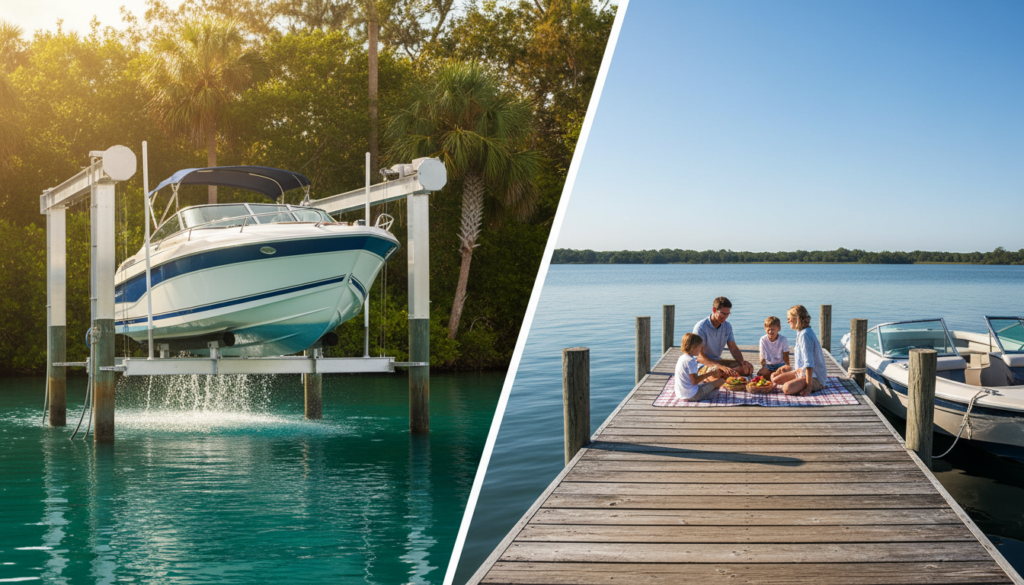
Surprising fact: nearly 70% of waterfront owners report that their choice of storage cuts maintenance time by half.
You want to spend more time on the water and less time fixing gear. Picking the right storage solution shapes how often you work on upkeep, how long prep takes, and how safe your craft stays when idle.
A good setup saves a lot of effort. Whether you prefer raising your craft out of the water or keeping it at a slip, the goal is the same: easy access, less wear, and more free time.
Before you decide, think about tides, depth, and local rules. A smart plan, quality hardware, and proper layout matter more than price alone. For real-world design tips and storm-ready choices, check a trusted dock builder’s guide on planning docks and lifts.
Key Takeaways
- Storage choice affects how much time you spend on maintenance.
- A raised option or a slip each offers distinct convenience and protection.
- Depth, hardware quality, and layout are critical to long-term performance.
- Plan for local water behavior and permit needs before building.
- Good design reduces repairs after storms and saves effort over time.
Understanding the Boat Lift vs Dock Which Is Better for Your Boat Dilemma
Picking the right storage setup starts with knowing how each option handles water and weather. A common goal is the same: reduce wear and make access simple. But the difference often comes down to local conditions and what you prefer.
One option keeps the hull out of the water to limit growth and corrosion. The other gives a stable platform for boarding, gear stowage, and tying up. Each has trade-offs in maintenance, cost, and daily use.
Think about depth, current, and seasonal changes at your shoreline. How you like to launch and secure the craft also drives the decision.
- Understand the difference between raised systems and platform systems for a lake or tidal site.
- Match the solution to site conditions and your launch preferences.
- Consider the type and size of the watercraft when choosing a system.
The Role of Boat Lifts in Protecting Your Hull
Keeping the hull dry saves hours of scraping and repair over a season. The right raising system prevents barnacles, limits corrosion, and keeps running gear dry. Your choice should match local water, ramp access, and the size and weight of the vessel.
Freestanding Lifts
Freestanding systems, common in Florida canals, use four pilings to support a cradle. A winch raises the cradle and keeps the hull clear of water.
Good when: you have deep enough water near shore and a stable lot. A 24-foot center console needs much less capacity than a 45-foot sportfisher, so pick capacity to match size and weight.
Piling Mount Systems
Piling mounts anchor gear to fixed pilings. That gives rock-solid support but demands strong pilings rated for the combined weight of vessel and equipment.
Tip: inspect pilings regularly and confirm they meet local codes and load needs.
Floating Lift Designs
Floating lifts use a platform that rises with water level. The platform design keeps hulls dry and reduces barnacle growth over time.
- Advantage: platform follows tide changes and protects running gear.
- Use case: shallow shorelines benefit from ramp-style shore mounted options and floating platforms.
- For maintenance trends in Cape Coral, see lift repairs in Cape Coral.
Exploring Dock Options for Your Waterfront Property
A well-chosen waterfront platform changes how you use the shoreline each weekend. Think of this choice as part of how you plan daily access, storage, and safety at the water’s edge.
Benefits of Drive-On Platforms
Drive-on platforms are ideal if you own a PWC or small craft. The ShoreMaster drive-on port uses an incline and rollers to make launching quick and neat.
Cost note: a basic fixed dock with wood or composite decking usually runs $15,000 to $35,000 installed. Material and size drive most of that range.
- A drive-on platform gives simple ramp-style access and needs no motors or complex gears.
- Fixed docks create a permanent place for boarding and secure docking.
- Many owners pick a drive-on setup as a straightforward alternative to mechanical lifts.
- If you pull craft up to the shore, adding a winch makes retrieval smoother and safer.
- Comparing docks and platform options helps you match site conditions to storage needs.
- Result: a well-designed dock provides a stable platform so you can enjoy the water with less fuss.
Key Factors Influencing Your Storage Choice
Your storage choice should follow a simple site survey: depth, bottom, and access.
Water depth and bottom conditions determine what systems will work and how long they last.
Water Depth and Bottom Conditions
Always measure depth and test the lake bed before buying equipment. Soft or shifting bottoms may rule out a bottom-standing option.
If the ground is soft, a ramp-style shore unit or a floating lift often performs better and avoids costly repairs.
Boat Size and Weight Capacity
Match lifting capacity to the dry weight of the craft. Typical boat lifts range from 3,000 to 15,000 pounds, so pick a rating with margin.
- Measure length and beam to ensure proper docking fit.
- Understand the difference between a floating lift and a bottom-standing system.
- Proper installation depends on depth and lake bed stability.
Tip: If you want expert help and local advice about lake depth and bottom conditions, call EZ Dock Texas at (800) 654-8168 — it can save time and money and avoid wrong choices.
How Infrastructure Impacts Property Resale Value
High-quality marine infrastructure often turns a good listing into a sought-after waterfront sale. A single 20,000 lb boat lift in solid condition can add an estimated $15,000 to $25,000 of perceived value beyond what you paid for the hardware.
Investing in premium gear shows buyers you planned for longevity. Clean docks with sturdy pilings, lighting, and electrical service add clear convenience and raise buyer confidence.
Properties with existing lifts and neat docks often sell faster. Buyers notice when running gear and the hull are protected; that protection reduces perceived future maintenance.
- High-quality boat lifts signal well-maintained water access.
- Durable docks with electrical service add practical appeal.
- Modern infrastructure helps listings stand out against minimal setups.
Result: thoughtful investment in shore systems typically speeds sale times and boosts offers. If you plan to sell, keep records of maintenance and upgrades to show prospective buyers the value behind the price.
Conclusion
Your choice at the shoreline sets how simple daily access and long-term care will be, and it can save real time.
Match local depth, size, and weight limits to the available options to close the gap between need and reality. That difference guides whether a boat lift or a fixed dock fits best.
A boat lift or floating lift offers strong hull protection, while a well-built dock gives quick access for frequent trips. Think about lake conditions, capacity, and maintenance before you decide.
Take the time to evaluate needs. The right solution will protect your boat and raise enjoyment and property value over the long run.
FAQ
How do freestanding lifts differ from piling mount systems?
Freestanding lifts sit on the lakebed and support the craft without shore attachments, giving you a clean look and easy access. Piling mount systems attach to vertical pilings driven into the bottom, which adds stability in currents and wind. Your choice depends on bottom type, water movement, and local regulations.
Can floating lift designs work in shallow water?
Yes. Floating designs adjust with water level changes and often work where depth varies seasonally. They require secure anchoring and occasional maintenance of flotation components. They shine when you need adaptability without major shoreline work.
What are the main benefits of drive-on platforms?
Drive-on platforms let you load gear and launch quickly without mechanical hoists. They’re ideal if you want simple boarding, easy storage of tenders, or a stable platform for fishing and sunning. They need enough water depth at the ramp and a suitable approach.
How does water depth and bottom condition affect my storage option?
Depth and substrate dictate feasible installations. Soft muck may not support freestanding posts, while rock or clay can hold pilings. Very shallow sites might only allow floating systems or ramps. A site survey or sounding will clarify limits before you invest.
How do I match size and weight capacity to my vessel?
Check the craft’s length, beam, and displacement and then choose a system rated above those numbers. Under-capacity risks structural damage and safety hazards. Manufacturers like ShoreMaster and ShoreStation list capacities so you can compare models.
Will adding a lift or platform raise my property value?
Properly installed waterfront infrastructure can boost resale appeal, especially if it improves access and protects the hull. Local market preferences matter: some buyers prefer a simple dock, others value a mechanical system that minimizes upkeep.
How much maintenance do mechanical hoists require?
Regular inspections, corrosion control, and occasional motor or cable servicing keep hoists reliable. Saltwater sites need more frequent care. A basic maintenance schedule prevents costly failures and extends service life.
Are there environmental rules I should know about?
Yes. Permits often apply for in-water work, and agencies like the Army Corps of Engineers or state environmental departments set limits. Rules cover footprint, materials, and impacts to habitat. Check local regulations early in planning.
Can I install a system myself or should I hire a pro?
Simple floating platforms or small drive-on ramps might be DIY if you have skills and proper tools. Complex pilings, electrical hoists, or work in regulated zones usually require licensed contractors and permits. Hiring pros reduces risk and ensures code compliance.
How do wind, waves, and current influence the choice?
High winds and strong currents favor robust pilings or engineered freestanding systems. Sheltered coves can use lighter floating options. Consider local weather patterns and seasonal changes when planning placement and anchoring.
What safety features should I look for in any installation?
Non-slip decking, proper handrails, secure cleats, and fail-safe braking on winches matter. For electric systems, GFCI protection and marine-grade wiring are essential. Prioritize features that protect people and prevent accidental drift or release.
How do costs compare between different solutions?
Upfront costs vary: simple floating platforms are cheapest, pilings and engineered freestanding systems cost more, and powered hoists add to price. Long-term expenses include maintenance, repairs, and permit fees. Balance initial budget with ongoing needs.
Will a system fit multiple vessels or changing needs?
Modular platforms and adjustable hoists can accommodate different hulls and sizes. If you expect to change vessels, choose options with extra capacity and adaptable supports so you avoid another major investment later.
What brands and products are recommended for reliability?
Established makers like ShoreMaster, ShoreStation, and Jet Dock offer a range of proven designs. Research warranties, local dealer support, and user reviews to pick a model that matches your conditions and service expectations.