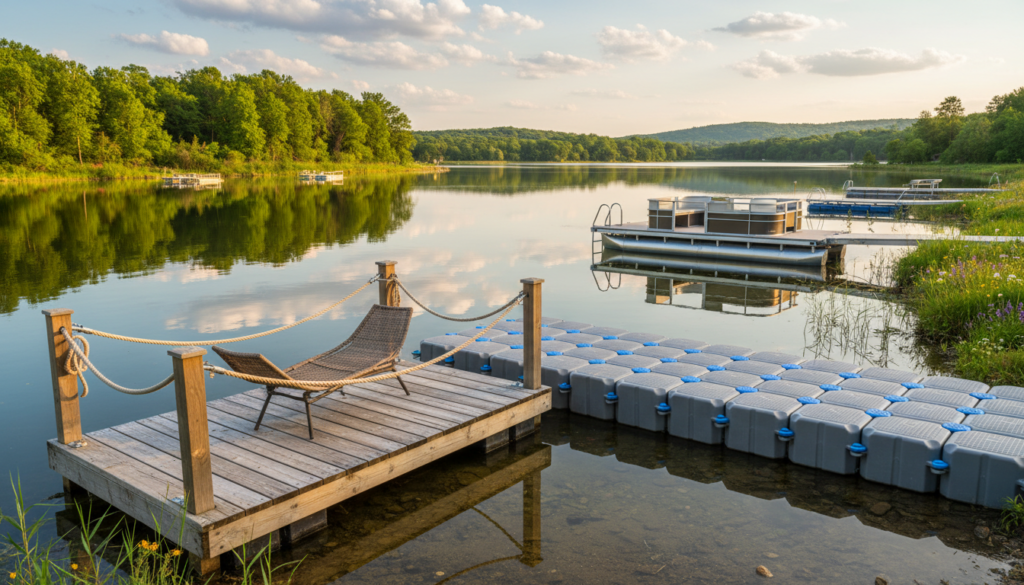
Surprising fact: since 1991, EZ Dock has helped thousands of owners match boats with floating options, changing how people access shorelines.
You face choices that affect access, safety, and upkeep. Start by checking depth, currents, and shorelines near your property.
Materials matter: wood, aluminum, and steel behave very differently under seasonal conditions and ice. Pilings, cribs, or floating systems each suit certain areas and boat types.
Good planning saves time and maintenance later. Consider decking, pipe supports, and accessories that fit your boat and local levels.
Why it pays off: a well-chosen dock gives immediate water access, boosts property value, and secures your boat through changing conditions.
Key Takeaways
- Match a dock option to depth, shorelines, and currents before buying.
- Compare materials—wood, aluminum, steel—to suit your climate and maintenance goals.
- Floating systems and cribs work well in variable levels and rocky areas.
- Plan for winter ice, seasonal levels, and long-term maintenance.
- EZ Dock’s experience since 1991 helps you weigh types docks and dock options.
Understanding Your Shoreline Environment
Take time to map depth, sediments, and vegetation around your property. These clues tell you which structures will last and how currents will move near your edge.
Nearshore and Offshore Zones
The nearshore zone includes the upper and lower shoreface where rocks collect and waves break. This area is prone to strong movement and sediment shifts.
Nearshore behavior affects stability. If waves regularly scour the bed, permanent pilings may fail and floating systems might be smarter.
Identifying Bottom Conditions
Before installing dock systems, identify sand, mud, or rock bottoms. Each bottom type changes anchoring, decking choice, and maintenance time.
Rocky shorelines often need special permits and careful work to avoid faster deterioration. Vegetation and erosion patterns must be respected to protect the local ecosystem.
Survey depth changes and bottom material with a pro before committing to any structure.
| Bottom Type | Common Issues | Recommended Structures | Typical Materials |
|---|---|---|---|
| Sand | Shifting, low bearing | Floating docks, cribs | Polyethylene, wood decking |
| Mud | Low support, deep silt | Floating systems, long pilings | Aluminum, steel pilings |
| Rock | Hard but uneven, regulatory limits | Anchored floats, custom cribs | Steel fittings, treated wood |
- Consult a specialist to map depth and bottom before you buy.
- Match types and materials to site conditions to lower long-term maintenance.
What is the Best Dock Design for Shallow Water
Pick a dock approach that keeps access steady even as the lake changes through the season.
Balance stability and site limits. In shallow areas you usually avoid heavy pilings or crib foundations when sand or soft mud shifts beneath your surface. Floating systems often win here because they rest on top of the levels and adapt without invasive anchors.
Pipe-supported platforms work well where a firm bottom exists. Those types give rigid support with minimal footprint, and they suit calm bays and protected shorelines.
Plan for fluctuations. Choose decking and materials—wood, aluminum, or polyethylene—that tolerate changing currents and winter cycles. Also, factor in boats, accessories, and maintenance time so your structure stays useful year after year.
- Favor floating units when bottom support is uncertain.
- Avoid permanent cribs if sand or silt moves frequently.
- Confirm local rules before you build to protect habitat and avoid fines.
For practical next steps, read a builder’s take on storm-ready choices and planning at boat dock builder storm-ready design choices.
Evaluating Floating Docks for Versatility
A flexible floating system adapts to shifting levels and varied shoreline layouts. You can reconfigure modules to fit narrow bays, wide slips, or angled shorelines without major crew or heavy equipment.
Benefits of Modular Systems
Modularity means you add or remove sections as your needs change. If you buy a new boat or want extra decking for guests, you adjust layout with minimal time and cost.
Environmental advantage: modular floating docks sit atop the lake and reduce disturbance to the bed. No cribs or deep pilings usually means less impact on plants and fish.
“Floating modular systems offer flexibility and less long-term maintenance when currents are modest.”
- They rise and fall with water levels, keeping access steady.
- Many sections detach for winter storage to avoid ice damage.
- You can add accessories like boat ports, swim platforms, or railings later.
| Feature | Advantage | Best Conditions |
|---|---|---|
| Modular sections | Reconfigurable layout, easy repairs | Variable shorelines, changing levels |
| Floating polyethylene | Low maintenance, resists rot | Soft bottoms, minimal currents |
| Aluminum frames | Lightweight, durable | Calm lakes, longer spans |
| Winter removal | Protects from ice, extends life | Areas with heavy winter ice |
The Role of Piling Docks in Stable Conditions
When currents run strong and depth holds, driven pilings give lasting support. You get a permanent platform that suits larger boats and heavy use.
Installation matters. Pilings are usually driven to a depth about three times their width for solid hold. That depth and material quality determine how well a piling dock resists waves and current.
- Stability: Best in deep, steady channels where levels rarely swing.
- Maintenance: Wood pilings need wraps and regular checks to prevent rot and insect damage.
- Winter: Confirm the structure resists ice movement against beams.
“A properly built piling dock gives years of steady service when site conditions are right.”
| Piling Type | Typical Materials | Maintenance Needs |
|---|---|---|
| Wood | Treated lumber | Wraps, inspections every season |
| Steel | Galvanized steel | Rust checks, protective coatings |
| Concrete | Cast concrete | Low upkeep, heavy install |
Considering Pipe Docks for Shallow Areas
If you need a steady walkway on a firm bed, pipe systems deserve a close look.
Pipe docks typically use aluminum frames and metal legs that sit on a level bottom. They give a stable surface without the cost of driven pilings.
These units are easy to remove in winter, which helps prevent ice damage. Their narrow footprint also lowers disturbance to plants and fish along your shoreline.
Adjustable legs let you tweak height and keep the decking steady through minor seasonal water level shifts. That saves time and small repairs later.
“Pipe systems are a cost-efficient, low-impact option when bottom conditions are firm and currents are mild.”
| Feature | Benefit | Best Conditions |
|---|---|---|
| Aluminum frame | Light, resists corrosion | Firm, even sediment |
| Removable legs | Protects from ice | Areas with seasonal freeze |
| Minimal footprint | Lower habitat impact | Residential shoreline |
- Not recommended for deep channels or strong currents that can rock the frame.
- Verify bottom firmness before you install to keep legs level and safe for boats and people.
When to Choose a Crib Dock
When your shoreline needs a permanent platform, a crib option gives heavy-duty stability. Crib docks are built from crate-like wood frames set on the bottom and filled with large rock. This creates a solid base that resists shifting and ice.
Think long term. These structures suit shallow water where you want maximum stability for years. They handle ice flow well and support heavier decking and larger boats.
Expect hard work. Construction is labor-intensive: building wood cribs and hauling stone on-site takes time and crew. Because cribs are permanent, removal is difficult later.
Also check permits. Crib installations can change currents and harm habitat. Local rules may limit or ban them. Verify conditions and get approvals before you begin.
“Choose a crib only when you need a lasting, heavy-duty solution and you accept the permanent impact it brings.”
- Durable in cold climates and heavy ice.
- Labor and materials cost are higher up front.
- Not suitable if you want a movable or low-impact option; consider aluminum or pipe systems instead of cribs or pilings.
Exploring Cantilever Docks for Steep Slopes
Cantilever systems let you extend a sturdy platform over steep banks without heavy in-water work. These suspension-style docks hang over the water like a drawbridge and suit rugged, steep terrain.
How they work: strong cables and a secure shore anchor carry the load as the platform projects out. That keeps contact with the lake bed to a minimum and protects sensitive habitat below.
Key benefits: you can often raise or lower the unit with a winch to protect it during winter. The elevated layout also helps when traditional pilings, pipe mounts, or crib bases are unsafe due to slope or access limits.
Installation needs professional engineering. An expert will size anchors, check soil and shoreline strength, and pick proper materials like aluminum or treated wood where needed.
“Cantilever docks offer a sleek, low-impact option for steep banks, but plan for higher upfront costs and certified installation.”
- Best when shore slope prevents typical piling or pipe setups.
- Minimal bed disturbance helps meet sensitive conditions and permits.
- Expect higher hardware costs but long-term access and protection for your boat.
Comparing Dock Materials for Longevity
Choosing long-lasting materials shapes upkeep costs and season-to-season safety. Below is a short look at common options so you can weigh maintenance, cost, and performance.
Wood and Maintenance
Wood docks give a warm, natural look but demand steady care. Pressure-treated wood must meet EPA retention-rate rules to avoid contaminating nearby water.
Expect regular staining, sealing, and checks for rot, warping, and splinters. Annual inspections catch loose hardware and worn decking before problems grow.
Aluminum Durability
Aluminum resists corrosion and stays light yet strong. That makes it a smart long-term choice when you want lower routine upkeep.
Aluminum systems cost more up front than wood but often save money over time through fewer repairs and longer service life.
Polyethylene Advantages
Polyethylene floats without splinters, stays slip-resistant, and needs almost no maintenance. High-density variants resist sun and salt without chemical treatments.
This option suits floating docks and low-impact setups where you want minimal seasonal work.
“Inspect your materials each year to keep guests safe and extend useful life.”
- Compare costs versus maintenance when reviewing dock options.
- Consider pipe mounts or pilings only after checking bottom firmness and local rules.
- Pick decking that matches the material to reduce future repairs.
Environmental Impact and Regulatory Compliance
Protecting local habitats should guide every choice when you plan a water access project. You have a legal and ethical duty to limit environmental impact while keeping access safe and usable.
Federal rules, including EPA guidance, restrict work in wetlands and sensitive zones. Before installing dock hardware, always check local building codes and permit needs so your project meets regulations.
Floating docks often get agency approval because they avoid heavy excavation and leave the bed intact. These systems reduce disturbance and help protect plants and fish near your shoreline.
Be cautious with treated wood. Chemicals can leach into water and harm wildlife. Consider polyethylene or aluminum components when conditions call for low-toxicity materials.
“Work with a professional who knows local rules to avoid fines and keep your project sustainable.”
- Minimize impact: place docks to preserve vegetation and prevent erosion.
- Choose materials: favor non-leaching options over treated wood where species are present.
- Plan ahead: researching permits before installing dock systems saves time and money.
Essential Accessories for Your New Dock
Right accessories help you enjoy evenings on the water and protect your gear. Add solar-powered lights and sturdy cleats to improve safety for night use and reduce trip hazards.
Fenders, bumpers, and ladders make daily boating smoother. For piling docks, add rollers or hoops so a piling dock can rise and fall without rubbing your boat. Pipe docks benefit from removable ladders and soft bumpers to stop scratches.
Crib docks need heavy-duty bumpers since rock-filled edges are unforgiving. Install secure dock boxes to store life jackets, lines, and tackle and keep decking clear. When installing dock hardware, choose marine-grade stainless steel and UV-stable materials.
“Use quality parts that resist sun, salt, and repeated wet-dry cycles to avoid frequent repairs.”
- Night safety: solar lights and reflective markers.
- Boat care: fenders, bumpers, and rollers where movement occurs.
- Storage: lockable boxes to keep life jackets and tools handy.
- Materials: favor stainless and UV-stable plastics over untreated wood or cheap metals.
Conclusion
,Choose a path that matches your shoreline, routine, and the boats you keep.
Balance site facts with use: floating docks and pipe docks give flexible access as levels shift. Piling docks and crib docks deliver long-term strength where depth and conditions hold steady.
Materials matter: favor quality wood or aluminum to cut upkeep and extend life. Check local rules and protect habitat before you start.
Plan accessories and storm steps, then read a builder’s guide to resilient options at coastal dock construction to finalize your choices.
FAQ
How do I assess my shoreline environment before choosing a dock?
Walk the nearshore and offshore zones at different tides or lake levels. Note slope, wave action, current, and obstructions like rocks or vegetation. Test bottom conditions by probing for sand, clay, silt, or rock. That info guides whether you pick a floating, piling, pipe, or crib solution and helps with permitting.
Can a floating system work with seasonal water-level swings?
Yes. Modular floating sections rise and fall with water, so they handle seasonal swings well. Add adjustable ramps or gangways to keep walkways accessible. Choose flotation rated for your load and ice conditions if winters are harsh.
When are piling systems a smart choice?
Use pilings when you have deeper channels near shore or firm bottom that accepts driven or screwed piles. They provide a stable platform with less movement than floats. Pile docks suit areas with higher waves or boat traffic but need equipment for installation and careful permitting.
Are pipe docks good in very shallow spots?
Yes. Lightweight steel or aluminum pipe frames can work in shallow flats where piles aren’t feasible. Pipes perform well on sand or silt and can be anchored with screws or concrete anchors. They’re cost-effective and simpler to install than full piling systems.
What makes crib docks appropriate for some properties?
Crib docks use rock-filled timber or concrete boxes set on the bottom. They work when you need a heavy, permanent platform over very shallow water with minimal current. Expect significant shoreline disturbance during build and plan for long-term maintenance of wood cribs.
How do cantilever setups help on steep slopes?
Cantilever or piling-supported cantilevers let you extend a dock from a high bank where shore access is limited. They keep the structure above fluctuating water and reduce need for long stairs. They’re useful when you want minimal footprint in the littoral zone.
Which decking material gives the longest life with low upkeep?
Aluminum and polyethylene (HDPE) decking resist rot and corrosion and require less maintenance than wood. Aluminum is rigid and durable; HDPE offers a non-slip, low-maintenance surface. Pressure-treated or tropical hardwoods look good but need regular care and sealing.
How does environmental impact affect my choice?
Choose options that limit disturbance to aquatic plants, fish habitat, and sediment. Floating docks have lower bottom impact. Avoid wide crib footprints in sensitive littoral zones. Check local regulations and seasonal work windows to protect spawning or migration periods.
What accessories should I consider when outfitting a new dock?
Think ladder, cleats, bumpers, dock boxes, solar or electric lighting, and boat lifts or davits if you want to protect craft. Add fenders and non-slip decking. Match accessories to your boating style, safety needs, and local conditions like ice or strong currents.
How do currents, tides, and waves influence system choice?
Strong currents and waves favor piled or heavy fixed systems over small floats. Floats work well in protected coves. Account for expected wind fetch and seasonal ice loads; heavier anchors or larger pilings may be needed where forces are high.
What maintenance should you plan for wooden structures?
Inspect fasteners, framing, and decking yearly. Re-stain or seal wooden planks every 2–4 years. Replace rotten members promptly to prevent bigger failures. Keep marine-grade stainless fasteners to reduce corrosion near salt or fresh water.
Do you need permits before installing any structure?
Almost always. State, county, and federal agencies may require permits, especially in navigable or environmentally sensitive waters. Provide plans showing location, impact, and mitigation. Hire a local installer or consultant familiar with permitting to speed approvals.
How do boat type and size affect dock selection?
Match dock length, berthing layout, and load capacity to your boat(s). Pontoon and bass boats may need lighter access and longer finger piers; large cabin cruisers require deeper approaches and heavier pilings or boat lifts. Plan for future craft changes too.
What about winter ice — how does it change your approach?
Ice can crush floats and damage framing. In freeze zones, use ice-resistant floats, cantilever lifts, or pilings set below expected ice shear. Remove or raise boats and accessories before freeze-up and consider seasonal removal for lightweight systems.