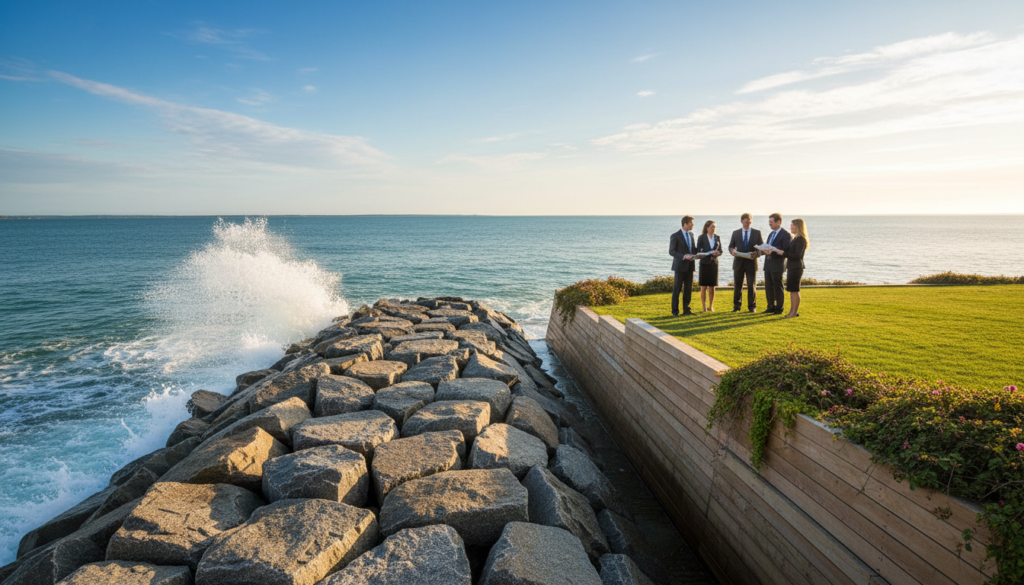
Surprising fact: nearly 40% of private shorelines face measurable land loss within a decade without proper protection.
You need clear, practical advice when erosion and wave action threaten your land. This short guide helps you decide between major stabilization options and shows how a tailored site evaluation can change the outcome.
LakeScape offers targeted site evaluations to match shoreline forces, soil types, and your goals. That assessment is the first step toward a plan that stops gradual loss and guards your investment.
In this guide you’ll learn how different structures handle waves, seepage, and soil movement. We cover key tradeoffs so you can choose a solution that lasts and fits local regulations.
For more on planning and permitting, read a detailed resource on coastal construction and timelines here.
Key Takeaways
- Start with a professional site evaluation to match method to site conditions.
- Different approaches handle waves and seepage in different ways.
- Material choice and design affect lifespan and maintenance needs.
- Permits and habitat rules often shape feasible options and costs.
- Early investment in the right solution reduces long-term repair costs.
Understanding Shoreline Erosion and Your Property
Small changes at the water’s edge can signal bigger problems inland. Take time to spot early signs so you can protect your land and the value of your property.
Signs of Soil Loss
Look for soft ground after rain, small scalloped sections where soil has washed away, and exposed roots near the water.
These are early warnings that erosion is active and could worsen if ignored.
Natural Forces at Play
Wind-driven waves and boat wakes push soil away slowly over years. Heavy rain increases runoff and reduces bank stability.
- Small soil slips often lead to larger land loss when repeated.
- Ongoing instability can cut into your shoreline and lower market value.
- Understanding how water interacts with your site helps find the root cause.
Recognizing these issues early protects your waterfront and gives you time to plan repairs before a structural emergency occurs.
seawall vs retaining wall which is better for waterfront property
Identify whether waves or soil pressure cause the most damage before choosing a fix.
A seawall is a man-made structure built to act as a primary barrier against wave energy and direct water force on your shoreline. When high-energy wave action drives erosion, a properly engineered seawall gives strong, immediate protection.
By contrast, you need a structural support when soil pressure and grade changes threaten your land. That solution holds back earth and stabilizes slopes so buildings and lawns stay safe.
Renegar Construction in North Carolina stresses that matching the structure to site forces protects your assets best. Many homeowners assume one solution fits all and later face ongoing damage.
- Choose support when soil loads and slope changes dominate.
- Choose a barrier when wave energy and direct water attack the shore.
- Compare forces on your unique coastline to decide which structures will protect waterfront investments long term.
| Issue | Best Response | Primary Benefit |
|---|---|---|
| High wave energy | Vertical barrier structure | Deflects waves and prevents erosion |
| Soil pressure / slope failure | Earth-retaining structure | Stabilizes grade and supports land use |
| Mixed forces | Hybrid designs and site evaluation | Balanced protection and drainage |
The Role of Retaining Walls in Soil Management
A properly built retaining structure turns steep slopes into safe, usable terraces along your shoreline.
Managing grade changes means holding back soil to create stable level zones. For many waterfront homeowners, that stability protects lawns, gardens, and structures from gradual erosion.
These systems support sloped yards and stop soil from collapsing toward the water. They also make flat areas you can actually use, so you gain outdoor space without importing tons of fill.
Why it matters
- A retaining wall manages the weight of soil so your land stays stable against gravity.
- Proper design focuses on drainage and backfill to prevent bank erosion over time.
- When placed correctly, the structure preserves usable areas above the shoreline and keeps nearby property safe.
How Seawalls Deflect Wave Energy
A shoreline’s defense works by turning raw wave energy into a gentler flow along the edge.
Seawalls are engineered to deflect wave energy and act as a hard barrier that protects your property from the force of water. Proper construction and design make a major difference in long-term erosion control.
Vertical and Curved Profiles
Vertical designs stand up to large waves. They absorb and redirect high energy straight back to the water.
Curved profiles spread incoming energy along the face. That dispersion reduces the direct impact on your land and helps lessen erosion.
Resistance to Boat Wakes
Boat wakes create repeated stress that can loosen soils behind a hard edge. Professional oversight during construction ensures the structure resists that cycle.
- Seawalls act as a firm barrier to stop erosion.
- Vertical faces suit consistent, heavy waves.
- Curved shapes reduce peak impact and calm nearshore waves.
Exploring Shoreline Stabilization Alternatives
Natural buffers like rock riprap and native plantings can protect a shoreline while keeping a soft, natural look.
Riprap and vegetation offer practical solutions when waves are mild and soil loss is moderate. These methods work well in areas where a heavy, vertical structure feels out of place.
You can combine slope grading with improved drainage to slow soil movement. Proper grading and pipes direct water away and reduce undercutting of the bank.
These systems often cost less and blend into the local environment. They give you usable shoreline and a more natural appearance than rigid options.
- Use rock and plant mixes where energy is low to moderate.
- Focus on drainage control to prevent repeat failures.
- Match the approach to your site conditions and water force level.
When erosion is light, a natural solution usually protects land and keeps the view you want. Pick the method that best fits your shoreline and goals.
Comparing Structural Costs and Longevity
Cost per foot tells part of the story; expected years and maintenance complete it. You should compare upfront construction figures with likely lifespan and upkeep to know the true investment.
Numbers to note: hard barriers often run $500 to $2,000 per linear foot, while revetments range $150 to $600 per linear foot depending on materials.
Material Selection
Material choice—concrete, steel, or armor rock—shapes durability, appearance, and long-term cost. Concrete structures commonly last 30 to 50 years. Bulkheads often last 15 to 25 years with proper maintenance.
Durability matters when wave energy and water pressure batter the shore. Good engineering and drainage reduce repair cycles and lower lifetime expense.
“High-quality materials paired with professional engineering create structures that maintain both stability and visual appeal.”
- Concrete and steel increase initial construction cost but boost years of service.
- Account for freeze-thaw cycles and soil composition when selecting materials.
- Investing in durable materials cuts frequent maintenance and protects your land value.
| Option | Typical Cost / ft | Expected Years |
|---|---|---|
| Hard vertical barrier | $500 – $2,000 | 30 – 50 |
| Revetment / rock | $150 – $600 | 20 – 40 |
| Bulkhead (timber/steel) | $200 – $800 | 15 – 25 |
The Impact of Drainage on Wall Durability
You can protect your edge longer by planning drainage before you build any heavy concrete or steel barrier.
Proper drainage prevents hydrostatic pressure from building behind your shoreline defense. Trapped water pushes outward and can crack even strong materials over time.
During installation, builders should add weep holes and select high-quality backfill. These steps let seepage escape and reduce load on the base of the structure.
- Use weep holes to relieve pressure and keep soil dry.
- Choose clean backfill materials so flow paths remain open.
- Inspect drainage annually to avoid slow erosion and costly repairs.
Even concrete or steel installations will fail without good water management. Regular maintenance of pipes and outlets keeps the system working and extends durability.
Professional construction practices prioritize drainage details. That focus preserves your investment and prevents common erosion problems down the line.
Integrating Docks and Outdoor Living Spaces
Designing outdoor living areas near the water demands a blend of function and structural sense.
Plan early so your dock and patio work together. A poorly placed support can block future dock expansion.
Boat lifts and other hardware need space and clear access. If a nearby retaining element sits too close, it can complicate installation.
Think about load and soil movement when you design decks, stairs, and seating areas. These living spaces must stay safe as conditions change.
- Coordinate anchors and foundation points to avoid conflict.
- Allow clearance for lifts, pilings, and maintenance access.
- Design drainage so runoff won’t undermine nearby systems.
Comprehensive evaluation of your waterfront site prevents surprises. When each element — from docks to hardscapes — is planned as a whole, you reduce the long-term impact on your shoreline and improve usability.
| Common Conflict | Typical Effect | Practical Fix |
|---|---|---|
| Dock blocked by nearby grade support | Limits expansion and access | Reposition or redesign support with engineer |
| Patio drainage toward shore | Increased erosion under amenities | Install proper drains and redirect flow |
| Boat lift near buried utilities | Installation delays and extra cost | Locate utilities and plan lift location early |
| Uncoordinated systems installations | Higher maintenance and repairs | Use a single plan and contractor team |
Environmental Considerations for Coastal Protection
Living systems use plants and soft structures to absorb wave energy and hold soil.
When you plan coastal work, think about both stability and the local environment.
Living shorelines combine native vegetation, fiber logs, and rock to slow erosion. They let tides move naturally while adding habitat. This approach reduces hard-edge impact and can improve the appearance of your waterfront.
Living Shorelines
These systems help manage wave action and preserve sediment flow. They work best in low- to moderate-energy areas and where habitat value matters.
- Use plants to trap sediment and build natural buffers.
- Hybrid construction blends soft elements with small engineered features.
- Proper construction ensures the system withstands tides and seasonal storms.
| Approach | Main Benefit | Best Areas |
|---|---|---|
| Living shoreline | Habitat, sediment retention | Low to moderate energy |
| Hybrid design | Balanced protection and ecology | Mixed-energy zones |
| Hard barrier | Immediate erosion control | High-energy shorelines |
“Balancing structural protection with environmental health keeps your land viable against tides.”
Assessing Your Specific Shoreline Conditions
Start with a hands-on inspection to measure slope, exposure, and how water moves across your land.
Evaluate slope and soil first. A steep grade or loose soil creates a higher risk of land loss and affects the design of any wall or retaining wall you may need.
Next, gauge water energy and wave impact. Low energy often favors softer fixes; higher energy leans toward hardened solutions like seawalls.
- Note drainage paths and seeps that raise hydrostatic pressure.
- Check nearby docks and planned installation zones to avoid conflicts.
- Estimate cost drivers: access, materials, and required engineering.
Professional engineering gives you a plan with the right durability and stability for your waterfront property. Good oversight ties drainage, construction, and long-term maintenance into one effective solution.
A thorough site evaluation clarifies conditions and helps you choose the right mix of measures to protect your land from ongoing erosion and future land loss.
When to Consult a Professional Marine Contractor
If your bank keeps losing soil after storms, a pro can recommend durable fixes and guide construction.
Call a marine contractor when you see ongoing erosion, shifting steps, or repeated need for shoreline maintenance. These signs show the local energy from waves and tides is overwhelming simple repairs.
Renegar Construction and similar experts assess site conditions, provide engineering plans, and make sure the work follows local rules. They size anchors, drainage, and backfill so the solution lasts.
A skilled team also helps you manage cost and construction complexity. Early engagement prevents patchwork fixes and lowers long-term spending.
- Professional evaluation of your coastal property ensures designs match actual site conditions.
- Contractors plan for waves, tides, and possible permit requirements.
- Good installation and maintenance planning extend the life of any protective system.
“A proactive, engineered approach saves money and keeps your shoreline stable over time.”
| Trigger | What a Pro Does | Immediate Benefit |
|---|---|---|
| Ongoing erosion after storms | Site evaluation and engineered design | Long-term stability |
| Shifting steps or slumping bank | Structural fixes and drainage solutions | Prevent collapse and reduce maintenance |
| Complex regulatory or access issues | Permit handling and staged construction | Smoother project and lower risk |
Conclusion
Let measured site conditions — slope, seepage, and wave return — guide the long-term fix you pick. Watch how your property and shoreline react through storms and calm days before you decide.
Understanding forces from water and boat traffic helps you weigh seawalls and a seawall-style approach against softer options. Look at how erosion happens, then match the right structure to those forces.
Professional engineering ties drainage, anchors, and materials into structures that last for years. Good design gives you reliable protection and lowers maintenance over time.
When you aim to protect waterfront investment, start with a clear assessment. The right solution creates a secure transition between your yard and the waterfront and buys peace of mind for years to come.
FAQ
How do erosion signs look on your shoreline?
Look for slumping soil, exposed roots, losing lawn or garden to the edge, and new scarp lines along the shore. You may see undercut banks after storms or more sediment in the water. These cues tell you that land is moving and action is needed to stop further loss.
What natural forces cause soil loss at the edge of your lot?
Waves, tides, wind, and boat wakes constantly move sediment. Seasonal storms and rising water levels speed up the process. Even groundwater seepage behind a barrier can weaken soil strength and lead to slumping.
How does a vertical barrier handle wave energy compared to a curved design?
A vertical barrier reflects most wave force back to the water, which can protect the toe of the slope but may increase turbulence. A curved or stepped face dissipates energy more gradually, reducing scour at the base and lowering erosion risk around structures like docks.
Will boat wakes damage your shoreline protection?
Yes. Boat wakes create repeated short-period waves that can erode softer soils and damage poorly anchored structures. Heavy recreational traffic means you should choose designs and materials that resist wake-induced scour and vibration.
Can you use soil-retaining structures to manage grade changes on your property?
Absolutely. Terracing with reinforced earth, anchored panels, or modular block systems helps stabilize slopes and create usable outdoor spaces. Proper drainage and tiebacks matter more than height alone to prevent failure.
What alternatives exist besides hard structural barriers?
Living shorelines, marsh plantings, riprap, and hybrid systems combine native vegetation with stone or biodegradable materials. These options reduce erosion while supporting habitat and often cost less over time for low- to moderate-energy sites.
How do materials affect cost and lifespan of your shoreline defense?
Concrete and steel typically last decades but cost more up front and need corrosion protection. Treated timber and modular blocks are cheaper initially but may require earlier replacement. Stone riprap has long life with minimal maintenance if sized correctly.
Why is drainage critical behind a protective structure?
Trapped groundwater raises pressure on the soil and structure, causing bulging, cracking, or collapse. You need filters, weep holes, or drainage pipes to relieve pressure and carry water away safely.
How can you integrate a dock or patio with shoreline protection?
Plan foundations and access points together so boat slips, stairs, and living areas don’t undermine the barrier. Use robust connection details, protective riprap at pilings, and materials that tolerate splash and salt if applicable.
What environmental impacts should you consider when protecting your shore?
Hard barriers can increase erosion downshore and reduce habitat. Living shorelines support fisheries and birds but suit lower-energy sites. Permits often require habitat assessments and may mandate mitigation for impacts.
When are living shorelines a practical choice for your site?
Choose natural solutions when wave energy is low to moderate, you have room for gradual slopes, and you want habitat benefits. They perform well on estuaries, bays, and sheltered lakeshores when designed with native marsh plants and appropriate armoring.
How do you assess specific conditions before picking a solution?
Evaluate wave climate, soil type, tidal range, groundwater, existing vegetation, and neighboring impacts. A site visit with soil borings and topographic data gives the details needed to size and anchor any structure properly.
When should you call a marine contractor or coastal engineer?
Consult a professional before building, after major erosion events, or if structures show movement or cracking. Engineers can model wave forces, recommend anchors and drainage, and guide permitting so your investment lasts.