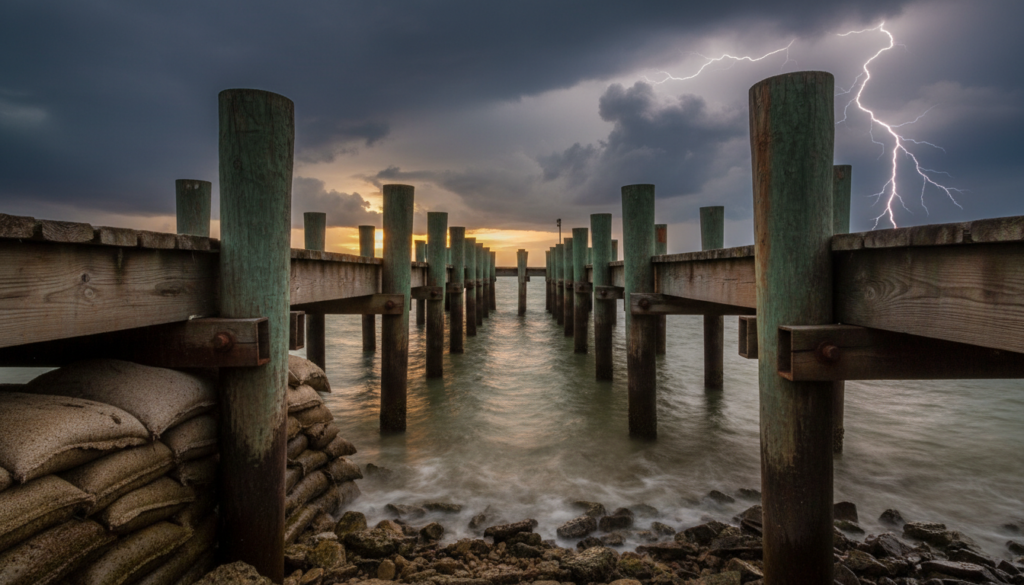
Surprising fact: nearly 70% of early dock failures in saltwater tie back to wrong materials or hidden corrosion, not just extreme winds.
Your waterfront investment faces relentless marine wear. Salt spray, sun, and shifting water conditions erode decking and hardware daily. That steady wear raises the risk of serious damage when a hurricane arrives.
A well-built dock gives you real peace of mind. Proper choices in decking, fasteners, and pile systems help keep a boat secure and reduce long-term repair bills. Small parts often decide a dock’s lifespan more than one big event.
Start with clear plans and a local expert. For questions worth asking a contractor before work begins, see this helpful guide: questions for dock contractors. Smart upkeep today means better safety and fewer surprises later.
Key Takeaways
- Most premature failures stem from poor material choice and hidden corrosion.
- Routine maintenance of decking and hardware cuts long-term risk.
- Select materials suited for marine exposure for longer service life.
- Plan with a qualified local builder and document hidden damage first.
- Small fixes now save major repair costs after severe weather.
Understanding the Risks of Storm Surge to Your Waterfront Property
Sudden water surges push massive force against piles and planks, exposing weak links in any waterfront build. A storm surge is a rapid rise in sea level driven by a hurricane that can send powerful waves into shallow areas near shore.
The mechanics of surge damage
The Mechanics of Surge Damage
When a surge arrives, moving water slams into the framing and decking. That pressure can cause structural damage to posts and connections almost instantly.
Dangers of Compromised Decking
Cracks in traditional boards and loose fasteners let water pry planks free during rapid fluctuations. After Hurricane Milton in 2024, sustained winds above 150mph and gusts near 180mph created massive water shifts that wrecked many docks not built for these conditions.
When decking fails, the risk isn’t just cosmetic: a collapsing dock threatens your boat, family safety, and can lead to costly repairs or full reconstruction. Regular inspection and choosing marine-grade materials cut the chance of catastrophic damage.
- Key risks: pried boards, loose fasteners, collapsing structures.
- Consequences: safety hazards, expensive repairs, loss of use.
How to Protect Your Dock from Hurricanes and Storm Surge with Better Materials
Choosing the right materials makes a dock far tougher in high-water events. Start with decking that lets water pass through rather than fight it.
Why open area design matters
Why Open Area Design Matters
Decking boards with built-in openings cut the force on your structure. Titan Open products, for example, feature 45–47% open area so waves move through the surface instead of piling up.
The Role of Flexibility and Strength
Balance is critical. Titan Deck is made from 100% polypropylene, which blends strength and give. Tests show these boards resist forces up to 2.5 times greater than some competitor options.
This flexibility helps absorb wave energy and reduces the chance boards pry loose. That lowers risk to your boat and overall waterfront investment.
Benefits of UV Resistance
Sun exposure matters. UV-stable decking keeps materials from becoming brittle. Durable surface chemistry means less damage, fewer repairs, and longer service life in marine conditions.
- Open area decking lets water pass through during a surge.
- Polypropylene boards combine flexibility with high strength.
- UV resistance preserves appearance and structural integrity.
- A secure fastener system prevents boards from detaching under pressure.
| Feature | Benefit | Typical Impact |
|---|---|---|
| 45–47% open area | Allows water flow through decking | Reduces lift and pressure on framing |
| 100% polypropylene | Flexible yet strong | Withstands ~2.5x competitor forces |
| High UV resistance | Limits brittleness and fade | Fewer repairs and longer life |
Essential Installation and Maintenance Practices for Storm Readiness
C
Secure installation and steady maintenance start with qualified installers who know marine framing. They fasten decking boards with a robust system that resists lift and limits structural damage during a surge.
Professionals account for shifting water and tidal fluctuations. This planning reduces risk when a hurricane or heavy storm pushes water into shallow areas.
Regular checks catch small cracks, loose fasteners, and early signs of exposure. Fixing these issues early saves you from emergency repairs and costly rebuilds later.
- Hire marine-savvy crews for secure board installation and correct fastener spacing.
- Schedule routine maintenance after seasonal changes and major weather.
- Use a strong fastener system that ties boards and framing into a unified structure.
| Practice | Benefit | Typical Outcome |
|---|---|---|
| Professional installation | Correct fastener patterns and framing alignment | Lower risk of board failure and structural damage |
| Routine maintenance | Early detection of cracks and loose hardware | Fewer emergency repairs and longer decking life |
| Marine-grade fastener system | Resistance to corrosion and movement | Improved safety for boat and users |
Conclusion: Securing Your Investment for Years of Peace of Mind
Invest in strong, durable decking and schedule steady maintenance so you avoid costly repairs later. Choose high-quality decking boards and fasteners that resist UV and hold under high winds.
When you pick surge-ready materials and follow a simple care plan, you lower the chance of water damage and extend the life of your dock. That keeps your boat safe and your waterfront investment sound.
Take action now. A small upgrade and regular upkeep deliver long-term safety, fewer repairs, and real peace mind for seasons ahead.
FAQ
What are the main ways storm surge damages waterfront structures?
Surge raises water levels quickly, pushing powerful waves and debris against pilings, decking boards, and fasteners. That force can crack supports, loosen connections, wash out fill, and cause boats to slam into structures. Repeated exposure weakens materials and raises repair costs.
Which decking materials hold up best under high water and wind exposure?
Look for reinforced composite, tropical hardwoods like Ipe, and marine-grade aluminum components. Those resist rot, swelling, and corrosion better than untreated wood. UV-resistant finishes and stainless-steel fasteners also extend service life in fluctuating waterfront conditions.
Why does an open area design reduce surge risk?
An open layout lets water pass through rather than building pressure against solid panels. Fewer solid surfaces mean less uplift and lateral load during peak surge. That lowers the chance of structural failure and reduces the need for post-storm repairs.
How can flexibility in a dock system help during extreme weather?
Systems that allow controlled movement—floating platforms or flexible connections between sections—absorb energy from waves and shifting water levels. That flexibility prevents brittle failures and keeps major structural elements intact.
What routine maintenance keeps decking and pilings storm-ready?
Inspect fasteners, boards, and piling caps twice a year and after major events. Replace cracked decking boards, tighten loose bolts, and treat exposed timber. Clean scuppers and clear debris so water flows properly around supports.
Are removable sections or quick-release hardware worth the investment?
Yes. Removable rails, ladder sections, or quick-detach fittings let you lower sail area and reduce wind loading ahead of a storm. They make post-storm cleanup faster and limit damage to permanent components.
How should boat mooring change in hurricane-prone areas?
Use heavy-duty dock lines, chafe guards, and redundant attachment points. Consider spring lines to reduce boat movement and increase distance to pilings. In severe forecasts, move vessels to safer harbors or dry storage if possible.
Can elevating a pier prevent surge damage?
Raising a structure above typical surge levels helps, but extreme events may still reach elevated decks. Elevation combined with open design, stronger pilings, and corrosion-resistant materials gives the best protection.
What role does UV resistance play in long-term dock durability?
UV-resistant coatings and materials slow degradation from sun exposure. That preserves structural integrity, reduces cracking and splintering of decking boards, and limits the need for frequent repairs in waterfront climates.
How do you assess whether a dock needs reinforcement after a storm?
Check for loose or missing fasteners, split pilings, sagging beams, and shifted supports. If load paths look compromised or safety is in doubt, get a marine contractor or structural engineer to evaluate and recommend repairs.
What preventive upgrades give the best return on investment?
Invest in stainless hardware, composite decking, reinforced pilings, and quick-release fittings. Combined, these reduce maintenance costs, lower repair bills after events, and protect the value of your waterfront investment.
How can I balance aesthetics with resilience when upgrading waterfront structures?
Choose materials that mimic natural wood but offer durability—like capped composite or sustainably sourced hardwoods. Coordinate finishes and rail profiles so upgrades blend with your property while improving performance against harsh conditions.