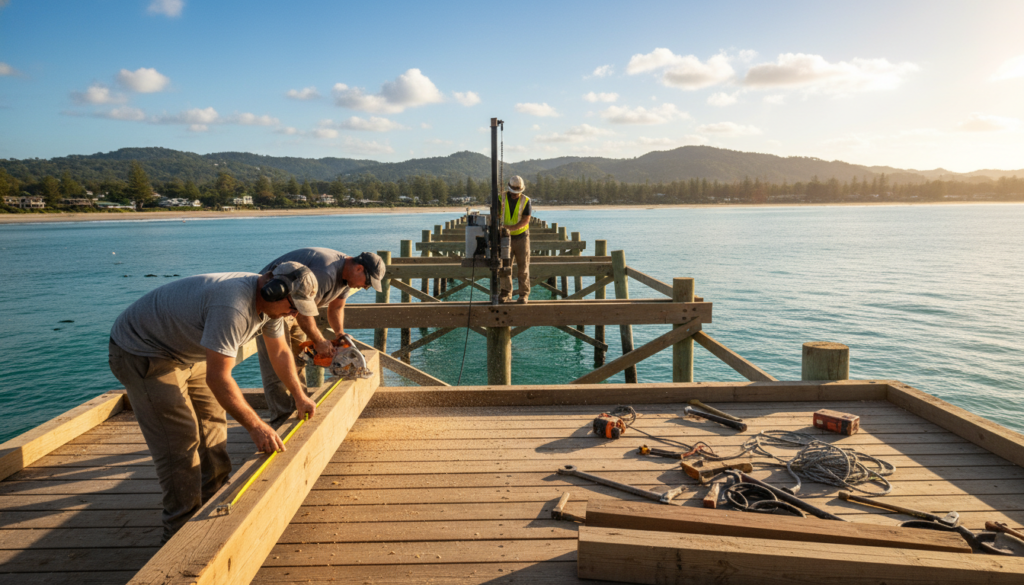
Looking for a reliable waterfront service that supports safe boat access and daily use at the water’s edge? Coastal Marine Group in Cape Coral, Florida, offers dock and pier design, build, and repair for homes, marinas, and commercial projects.
At 424 Southeast 47th Terrace, Unit A, Cape Coral, FL 33904, our team helps you evaluate dock and docks options and map a clear job plan. Call us at 239-372-4586 to get a quote or schedule an inspection while you read on.
We cover residential installations, marina upgrades, and commercial waterfront needs. Expect practical guidance on materials, structural approach, and durability so you can compare contractors and estimates with confidence.
Ready to decide on the right project path? If you want more background on our approach, learn more about our process and next steps.
Key Takeaways
- Coastal Marine Group provides dock and pier services in Cape Coral, FL.
- Contact 239-372-4586 to request a quote or inspect your waterfront job.
- Services serve residential, marina, and commercial project needs.
- Article will help you compare materials, structure, and long-term durability.
- Use the page to weigh options and plan the next steps for your boat access.
Pier & dock services from Coastal Marine Group in Cape Coral, FL
Coastal Marine Group delivers waterfront service across Cape Coral with planning, permits, and hands-on work for homes, marinas, and commercial sites.
Waterfront solutions for homes, marinas, and commercial properties
We handle new dock building, pier additions, re-decking, hardware replacement, and structural corrections that restore safe access.
Site use changes scope: a single home dock needs lighter loads and simpler layout. High-traffic marinas require stronger framing, clear circulation, and higher safety margins.
When to choose new building vs dock repair for existing docks
If wear is limited to surface decking or hardware, dock repair or re-decking often restores service quickly and cost-effectively.
Replacement is wiser when pilings fail, recurring damage returns, or the structure is outdated. New building gives better long-term value for heavy-use sites.
| Common need | Typical fix | When to replace |
|---|---|---|
| Deck rot or boards | Re-decking | Extensive subframe rot |
| Loose hardware | Hardware replacement | Recurring loosening after repair |
| Structural shift | Bracing, piling repair | Multiple damaged pilings |
“Routine assessments stop small issues from becoming costly damage.”
To evaluate feasibility and timeline, we need site photos, use patterns, and access details. Call us at 239-372-4586 or visit 424 Southeast 47th Terrace, Unit A, Cape Coral, FL 33904 to schedule an inspection.
pier builders near me for custom piers, boat docks, and waterfront projects
Custom waterfront layouts turn your yard into usable outdoor living that meets daily boating needs.
Position a custom dock as an extension of your home onto the water to expand recreation and make boat access routine and safe.
Boat dock design options that extend your home onto the water
Choose layouts that match how you use the shoreline: straight runs for simple access, L-shapes for side mooring, T-heads for extra seating, or slips for protected berths.
Each layout affects boat approach angles and boarding comfort. Plan for circulation, storage, and clear pathways to avoid rework later.
Materials and finishes: wood decking, composite decking, and hidden fasteners
Wood decking gives a classic look and feel. Composite decking reduces upkeep and resists rot and stains.
Hidden fasteners create a cleaner, safer walking surface and are a common choice on modern docks.
Structural choices: pilings, framing systems, and load capacity considerations
Decide between traditional pilings or metal framing and evaluate load capacity based on foot traffic, lifts, and equipment.
Floating-dock systems use engineered flotation chambers to support heavy loads while preserving structural integrity.
Optional upgrades for performance and comfort, including solar lighting
- Solar lighting improves nighttime safety with low operating cost.
- Integrated benches, cleats, and power provisions increase usability.
- Plan upgrades during the initial project to avoid extra labor and expense later.
“Good design choices today reduce repairs tomorrow and keep your dock ready for daily use.”
Dock building options for today’s water conditions
Before you choose decking or layout, evaluate how tides, boat wakes, and seasonal shifts affect the water at your site.
Floating dock advantages: customizable layouts and low-maintenance surfaces
Floating sections allow flexible footprints and simple reconfiguration for future needs. Homeowners and facilities can add slips or reshape runs without full reconstruction.
Many systems use polyethylene surfaces that need no routine coatings or wood care. A boat dock with this finish can be barefoot-friendly and easier to keep clean than wood.
Performance in rough weather: connections that move with the water
Connection couplers give the system both firmness and flexibility so sections move with the water. That motion reduces stress and lowers the chance of structural damage during storms or heavy chop.
Flotation chambers are engineered for strong load capacity, keeping everyday use stable and safe for gear and foot traffic.
Eco-friendly and ADA-accessible design considerations
Choose materials and transitions that limit environmental impact and allow accessible slopes and handrail placement. Thoughtful design affects approach angles and comfort for all users.
“Match your dock options to priorities like comfort, durability, flexibility, and compliance to get long-term value.”
Dock maintenance and dock repair to prevent damage and extend years of use
A steady maintenance plan keeps your waterfront safe and extends usable years of service. Regular checks and timely action reduce surprise failures and lower long-term cost.
Common issues to watch for: cracks, shifting, and hardware wear
Watch for visible cracks in decking and concrete, shifting sections that indicate settlement, and loose or corroded hardware.
Each sign points to a different root cause: cracks can mean age or load stress, shifting signals movement at the foundation, and worn hardware can lead to sudden failures.
How prompt repairs and inspections protect your dock and boat access
Seasonal checks plus inspections after storms are a practical rhythm. Prompt dock repair and small repairs stop issues from spreading into framing or pilings.
- Replace fasteners and brackets early to avoid framed damage.
- Fix loose boards to reduce trip hazards and boarding risk.
- Document inspections to plan work before peak use.
Durability expectations by material and why maintenance matters
Treated wood typically lasts 10–25 years, metal systems 30–40 years, and concrete solutions longer when cared for. Even “low-maintenance” surfaces need checks.
“Consistent care keeps docks safe and makes them last years longer.”
Hire a qualified team when movement, rot, or corrosion appears; pros identify causes and recommend repairs that extend the last years of service.
How to get matched with the right dock builders for your job
Start by sharing clear project details so pros can give accurate, apples‑to‑apples quotes. A typical “get matched” flow asks for your zip, a brief project summary, and contact info. Within moments you can see up to three highly rated local options to compare.
What to share about your project to compare options and quotes
Key checklist: dock type, approximate size, intended use, boat size, existing site conditions, and any access limits. Photos and notes on known constraints make pricing far more reliable.
Budget, timeline, and site conditions that impact building and repairs
Be open about budget so pros can tailor materials and scope. Major cost drivers include material choice, structural approach, accessibility, and difficult site conditions.
Time matters: seasonal demand, weather windows, and lead times for materials affect scheduling for both new builds and repairs.
Questions to ask about materials, warranties, and long‑term service
- What materials do you recommend and why?
- What warranty covers materials and labor?
- Do you handle permitting, demolition, and post‑build service?
- How quickly can you respond for future repairs?
“Compare bids only when each covers the same scope so decisions reflect true value.”
Prefer a direct local route? Call Coastal Marine Group at 239-372-4586 or visit 424 Southeast 47th Terrace, Unit A, Cape Coral, FL 33904 to schedule an on‑site evaluation.
Conclusion
Deciding whether to repair or replace starts with a clear look at current damage, recurring issues, and how you plan to use the dock over the next few years.
Prioritize materials and structure: choose wood only when appropriate, confirm piling and pilings are sound, and match design to your waterfront for long life and low upkeep.
Schedule routine inspections and prompt repair to protect safety and avoid costly failures. Standardize scope and ask the same warranty and service questions when comparing builders so quotes are apples‑to‑apples.
Call Coastal Marine Group at 239-372-4586 or visit 424 Southeast 47th Terrace, Unit A, Cape Coral, FL 33904 to discuss your dock or docks job and get next steps.
FAQ
What services does Coastal Marine Group offer for waterfront homes and marinas?
Coastal Marine Group provides full-service dock and pier construction, dock repair, pile driving, and maintenance for residential, marina, and commercial waterfront properties in Cape Coral, FL. Services include custom boat dock design, timber and composite decking installation, structural framing, and upgrades like solar lighting to improve safety and usability.
How do I decide between building a new dock and repairing my existing one?
Choose repair if damage is localized—such as loose boards, corroded hardware, or a few failing pilings—and the structure still meets load and safety needs. Opt for new construction when the framing or pilings show widespread deterioration, when you need a larger capacity for boats, or when current materials no longer suit your design or maintenance goals.
What boat dock design options can extend my home onto the water?
Popular designs include L-shaped and T-shaped docks for additional berthing, finger piers for multiple slips, and floating platforms for variable water levels. Each layout can be tailored with wood or composite decking, built-in seating, cleats, and lighting to match your lifestyle and waterfront access requirements.
Which decking materials are best: wood or composite?
Wood provides a traditional look and lower upfront cost but requires more maintenance and periodic sealing. Composite decking resists rot, splintering, and UV fading and needs less upkeep over time. Hidden fasteners offer cleaner lines and improved safety for both materials; choice depends on budget, aesthetics, and long-term durability needs.
What structural choices affect dock longevity and load capacity?
Key structural elements include pilings (concrete, treated timber, or steel), framing systems, and connection details. Proper piling depth, corrosion-resistant hardware, and correctly sized framing ensure the dock supports intended loads, such as boats, equipment, and foot traffic. Engineers often assess site-specific loads and conditions to set specifications.
What are the advantages of floating docks in changing water conditions?
Floating docks rise and fall with tides and water-level shifts, offering easier vessel access during fluctuations. They typically use low-maintenance decking and modular layouts that can be reconfigured. Floating systems also reduce stress on rigid connections, which helps in areas with frequent level changes.
How do docks perform in rough weather and high waves?
Docks designed for rough conditions use flexible connections, reinforced pilings, and heavy-duty hardware to absorb wave energy. Floating docks incorporate secure anchoring systems and robust flotation for stability. Proper design considers local wind, wave climate, and current to minimize damage during storms.
Can dock design be ADA-accessible and environmentally friendly?
Yes. ADA-compliant ramps, non-slip surfaces, and appropriate clearances can be integrated into dock projects. Eco-friendly options include durable, low-toxicity materials, pile designs that minimize seabed disturbance, and solar lighting systems to reduce energy use and light pollution.
What common issues should I watch for to prevent dock damage?
Look for cracked or warped decking, loose or corroded hardware, shifting pilings, algae buildup, and visible framing deterioration. Early signs like squeaks, uneven surfaces, or water pooling can indicate underlying problems that grow worse if not addressed promptly.
How often should I schedule dock inspections and maintenance?
Annual inspections are a good baseline, with additional checks after major storms or heavy use. Routine maintenance—tightening hardware, replacing worn boards, and cleaning surfaces—helps extend service life and prevents costly repairs down the line.
What durability can I expect from different dock materials over time?
Treated timber can last 15–30 years with regular care. Composite decking often lasts 25–40 years and needs less maintenance. Pilings made from concrete or steel typically outlast timber when properly installed and maintained. Actual lifespan depends on water conditions, load, and maintenance frequency.
What information should I provide when getting matched with dock builders for my project?
Share your site address, photos of the waterfront and current dock, desired dock size and layout, boat lift requirements, preferred materials, budget range, and timeframe. Also note any local regulations or homeowner association rules that affect construction.
How do budget, timeline, and site conditions impact quotes and options?
Site factors—such as water depth, bottom composition, access for equipment, and permitting—directly affect cost and schedule. Tight budgets may favor repairs or simpler materials; longer timelines allow for custom designs and higher-end finishes. Accurate site details help builders provide realistic quotes.
What questions should I ask potential contractors about materials, warranties, and service?
Ask about material brands (for example, Trex or Ipe alternatives for decking), warranty lengths and coverage, references or local project examples, permit handling, expected maintenance needs, and post-installation service options. Verify insurance, licensing, and any subcontractor use before hiring.
How are pilings chosen and why do they matter for my dock?
Pilings are selected based on soil or seabed conditions, water depth, and load requirements. Options include treated timber, concrete, and steel. Proper piling selection and installation are critical to prevent shifting, settling, and long-term structural failure.
Can I add solar lighting and other upgrades to improve dock performance and comfort?
Yes. Solar lighting, integrated seating, non-slip surfaces, and boat lifts are common upgrades that enhance safety and convenience. These additions can often be retrofitted to existing docks or included in new designs to match your lifestyle and energy goals.